Fire safety in multi-occupied residential buildings is one of the most closely scrutinised areas of compliance in the UK today. Following significant changes to the law in recent years, building owners and managing agents are under greater pressure than ever to show that their fire safety arrangements are current, evidenced and genuinely effective. This case study looks at how Mast Safety delivered a portfolio-wide fire safety programme across 15 residential apartment blocks in Erith and East London, combining Fire Risk Assessments, fire door inspections and remedial works into a single, coordinated piece of work.
The Brief
Our client was responsible for a portfolio of 15 residential apartment blocks across Erith and East London. They needed a clear, accurate picture of fire safety across every building, along with a practical route to addressing anything that fell short. The buildings were occupied throughout, which meant the work had to be carried out with minimal disruption to residents and in close coordination with managing agents and contractors.
The brief covered three connected areas: a Fire Risk Assessment for each block, a detailed inspection of fire doors across the portfolio, and the remedial works needed to bring everything up to standard. Rather than treat these as separate exercises, we delivered them as one programme, so the findings of each assessment fed directly into a single, prioritised plan of action.
Fire Safety in Residential Buildings: The Regulatory Context
The legal framework for fire safety in residential blocks has tightened considerably. The Regulatory Reform (Fire Safety) Order 2005 remains the foundation, placing a duty on the Responsible Person to ensure a suitable and sufficient Fire Risk Assessment is in place and kept up to date. The Fire Safety Act 2021 then clarified that the Order applies to the structure, external walls and individual flat entrance doors of multi-occupied residential buildings.
The Fire Safety (England) Regulations 2022 went further still. For multi-occupied residential buildings above 11 metres in height, Responsible Persons must carry out quarterly checks of all fire doors in the common parts and annual checks of flat entrance doors that open onto those common parts. In all multi-occupied residential buildings, residents must also be given clear information about the importance of fire doors and how to use them. For a portfolio of this size, keeping pace with those duties across every block is a significant undertaking, and exactly the kind of work we were brought in to support.
Our Approach
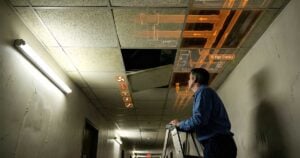
We began with a Fire Risk Assessment of each of the 15 blocks. Every assessment was based on a genuine site inspection rather than a desktop template, covering ignition and fuel sources, means of escape, compartmentation, fire detection, emergency lighting, signage and the fire safety management arrangements in place. Each block received its own structured report with a prioritised, risk-rated action plan.
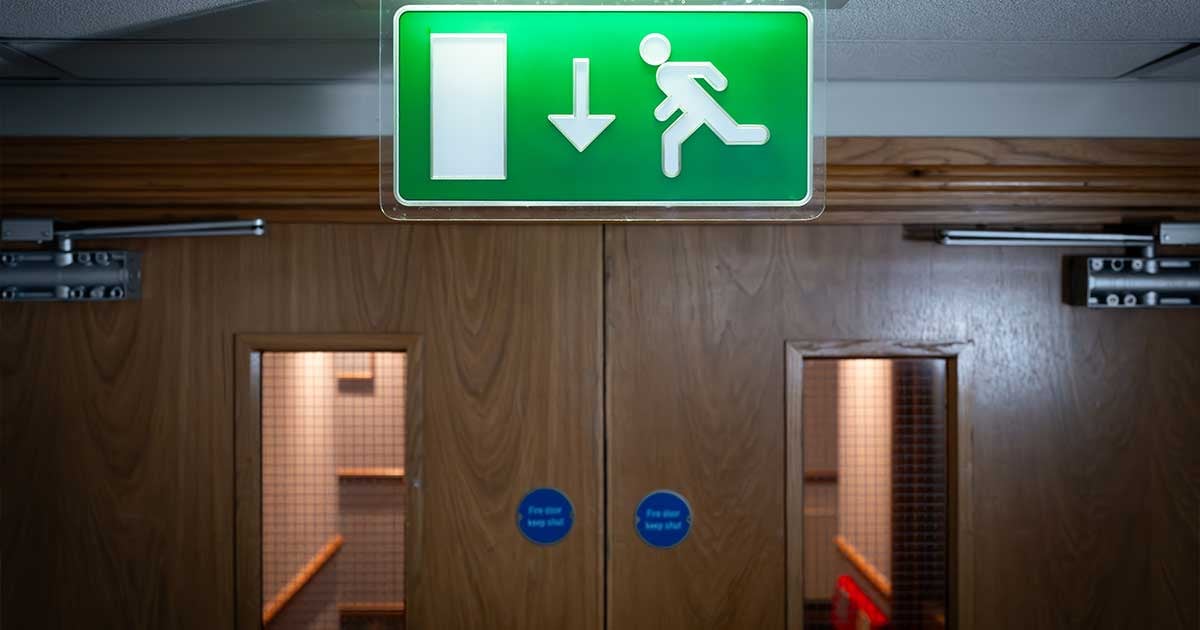
Alongside the assessments, we carried out detailed fire door inspections across the portfolio, in line with current fire safety legislation and guidance. A fire door only performs if every part of it works together, so we inspected each door as a complete system: the leaf, the frame, the gaps and seals, the hinges and hardware, and the self-closing devices. Doors that were damaged, poorly fitted or no longer effective were identified and recorded, with clear notes on what needed to be put right.
Fire Door Remedial Works
Identifying a problem is only useful if it gets fixed. Where our inspections found fire doors that needed attention, we specified the remedial works required to bring them back into compliance, and where required we carry out those fire door remedial works ourselves. That means a client can move from inspection to completed repair without having to source and manage a separate contractor, which keeps the programme moving and the accountability in one place.
Across the portfolio, this ranged from adjusting and replacing components such as seals, closers and hardware through to addressing more significant defects where a door was no longer fit for purpose. Each completed action was documented, so the client finished with a clear, evidenced record of the work carried out.
The Outcome
The programme was completed across all 15 blocks within the agreed timescales. The client came away with a clear compliance roadmap for the portfolio: a Fire Risk Assessment for every building, a full picture of fire door condition, and a documented record of the remedial works carried out. Just as importantly, they had practical, prioritised solutions rather than a list of problems, giving them a realistic route to meeting their regulatory obligations and, above all, improving life safety for residents.
Delivering this kind of work across occupied residential developments depends on coordination. Throughout the programme we liaised closely with the client, their managing agents and the contractors involved, so that remedial actions were sequenced sensibly and completed effectively without unnecessary disruption to the people living in the buildings.
Supporting Fire Safety Across Residential Portfolios
Mast Safety supports building owners, landlords and managing agents across London and the South East with fire safety compliance from start to finish. Whether you are responsible for a single block or a portfolio of buildings, we can provide professional Fire Risk Assessments, fire door inspections, and the remedial works needed to act on what we find.
Whether you are responsible for a single block or a portfolio of buildings, we can provide professional Fire Risk Assessments, fire door inspections, compartmentation surveys and the fire stopping and remedial works needed to act on what we find.
For organisations that want fire safety managed as part of a wider compliance picture, our Health & Safety Consultancy services bring everything together, so nothing is left to drift between annual reviews. And if you are not certain who holds responsibility for fire safety across your buildings, our guide to who is the Responsible Person under the Fire Safety Order is a useful place to start.