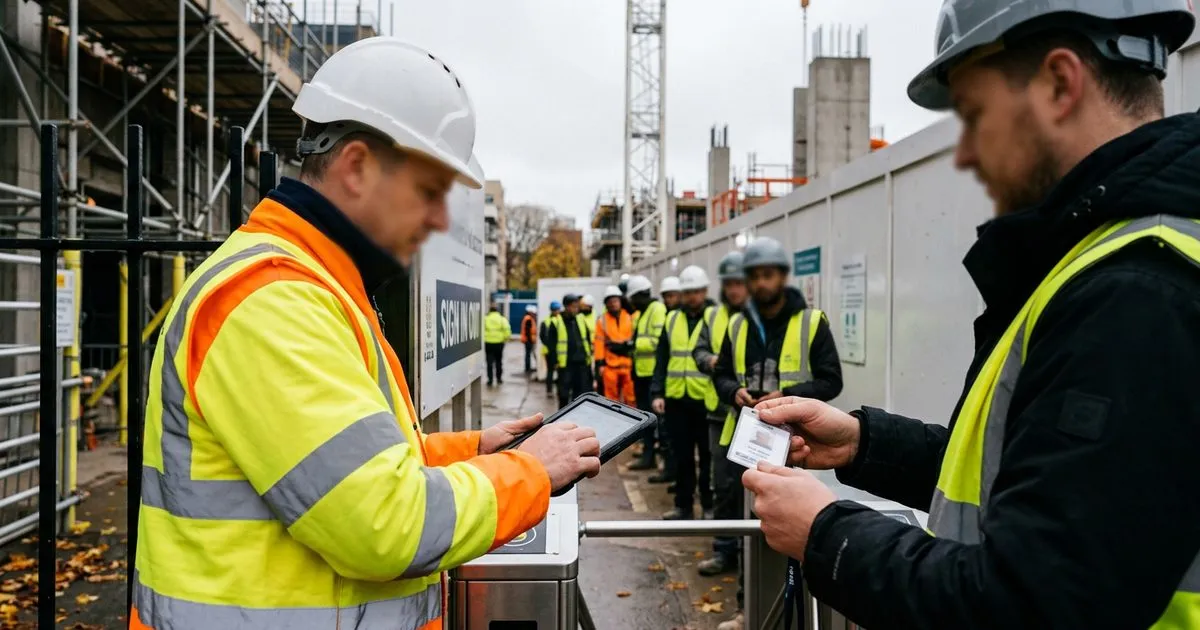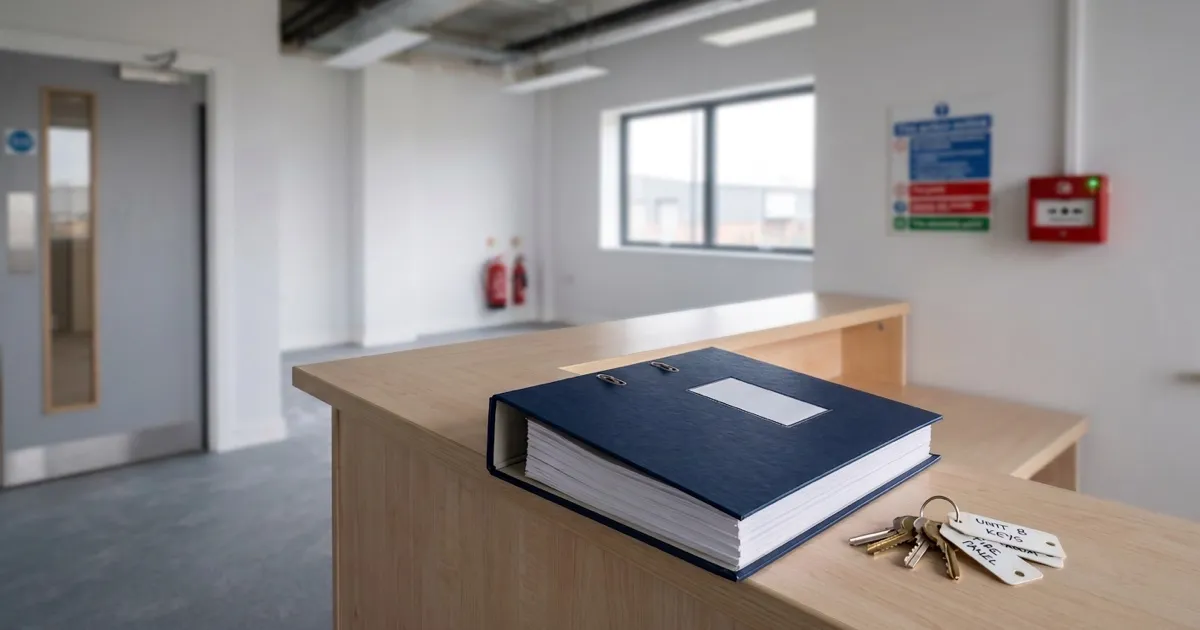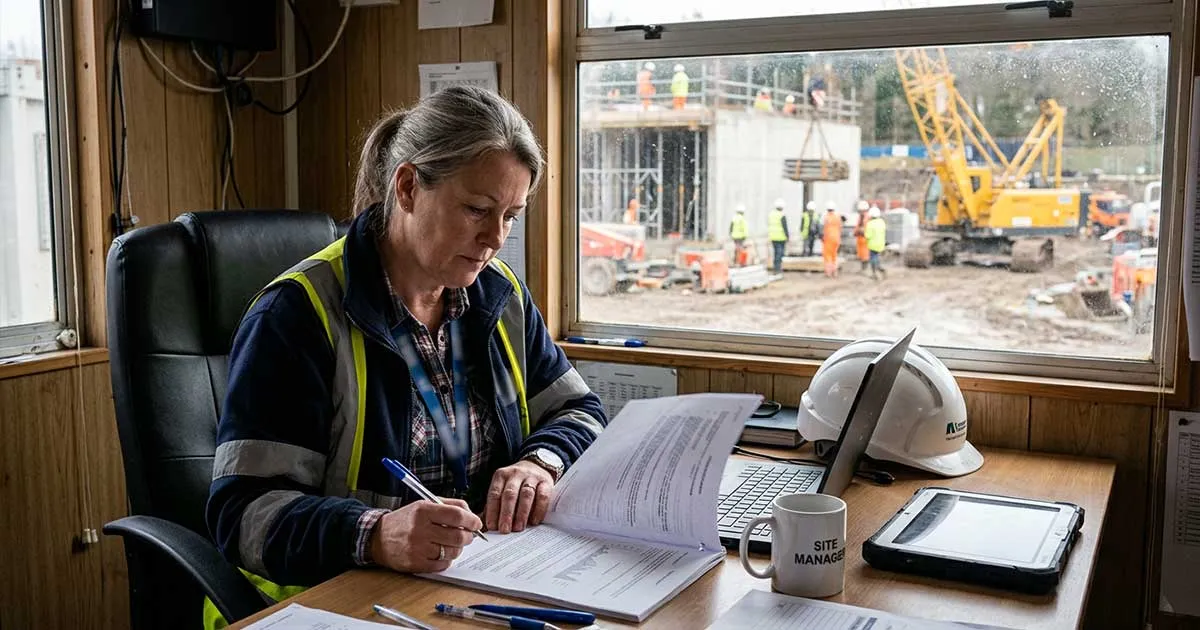
The Regulatory Reform (Fire Safety) Order 2005 places clear legal duties on the person responsible for fire safety in any non-domestic premises. That person is referred to throughout the legislation as the Responsible Person, and understanding who holds that designation, what it means in practice, and what happens when the role changes hands is important for any employer or building controller.
Who Is the Responsible Person?
The Fire Safety Order defines the Responsible Person by reference to control rather than ownership. In a workplace, the Responsible Person is the employer, provided the employer has control over the premises. Where the premises is not a workplace, or where there is no employer with day-to-day control, the Responsible Person is whoever has control of the premises as occupier or owner.
In practice, this means:
- In a business with a single occupier, the employer is almost always the Responsible Person.
- In a multi-let commercial building, the Responsible Person for the common areas is typically the landlord or their managing agent, while each individual tenant employer holds responsibility for the parts of the building they occupy and control.
- In buildings with multiple occupiers or complex ownership structures, there may be more than one Responsible Person, each with duties limited to the parts of the building they control.
If you employ people, or if you have control of non-domestic premises, the duties of the Responsible Person apply to you whether or not you are aware of them.
What Are the Duties of the Responsible Person?
The Responsible Person carries the primary legal obligation to ensure fire safety in the premises. The Fire Safety Order sets out these duties in detail, but they can be summarised under four broad headings.
Carrying out a suitable and sufficient fire risk assessment. The Responsible Person must ensure that a fire risk assessment of the premises is carried out and kept up to date. The assessment must identify fire hazards, identify the people at risk, evaluate that risk, and determine the fire safety measures needed to reduce it to an acceptable level. The assessment must be recorded in writing, whatever the size of the organisation. For a full breakdown of what the assessment must cover and when it needs to be reviewed, see our article on fire risk assessment requirements.
Implementing and maintaining fire safety measures. Based on the findings of the risk assessment, the Responsible Person must put in place appropriate fire safety measures and maintain them in effective working order. This includes fire detection and alarm systems, emergency lighting, fire doors, escape routes, firefighting equipment, and any other precautions identified as necessary.
Ensuring staff are informed and trained. The Responsible Person must provide employees with comprehensible information about the risks identified in the assessment and the measures in place to address them. Staff must receive appropriate fire safety training on starting employment and when risks change. Nominated fire wardens or marshals must receive additional training suited to their role.
Reviewing the assessment when required. The fire risk assessment is not a one-off document. The Responsible Person must review it regularly and whenever there is reason to suspect it may no longer be valid. This includes following any structural change to the premises, a change in use, a significant change in occupancy, a fire or near miss, or any enforcement action by a fire authority.
What Happens When the Responsible Person Changes?
When a business changes hands, or when control of a building transfers from one party to another, the duties of the Responsible Person transfer with the control. A new employer moving into premises should not assume that an existing fire risk assessment remains suitable for their occupancy. The previous assessment was produced for a different occupier, potentially with different activities, different staff, and different risk levels.
In practice, a change of occupier should trigger a review of the existing fire risk assessment, and in many cases a new assessment will be needed. Where the premises has a landlord responsible for common areas, both parties need to be clear on where their respective responsibilities begin and end.
What Are the Consequences of Non-Compliance?
Fire authorities have broad powers to enforce the Fire Safety Order. Inspectors can enter premises without notice, examine records and documentation, and take enforcement action where fire safety arrangements are found to be inadequate.
Enforcement action can range from an informal notice requiring improvements, through a formal enforcement notice with a specified timescale, to a prohibition notice restricting or stopping use of the premises where there is an immediate risk of serious personal injury. A prohibition notice takes effect immediately, without any right of appeal before it applies. Prosecution is also available, with unlimited fines and, in serious cases, custodial sentences available to the courts.
Individual Responsible Persons can be prosecuted personally, not just the organisation they represent. This makes it particularly important that whoever holds the designation understands their obligations and can demonstrate that they have taken reasonable steps to discharge them.
Getting Support with Your Responsibilities
Many businesses, particularly those without in-house health and safety expertise, appoint external support to help them meet their obligations as Responsible Person. This can include commissioning a professional Fire Risk Assessment from a qualified assessor, or engaging a retained Health & Safety Consultancy to provide ongoing compliance support across fire safety and broader workplace health and safety requirements.
The Responsible Person: Frequently Asked Questions
Can the Responsible Person delegate their duties?
The Responsible Person can appoint a competent person to assist with fire safety duties, and can commission external specialists to carry out the fire risk assessment on their behalf. However, legal responsibility remains with the Responsible Person. Delegation of tasks does not transfer the legal obligation.
Does the Responsible Person need a specific qualification?
No specific qualification is required to hold the designation of Responsible Person. The role is defined by control of the premises, not by training. However, the Responsible Person does need to ensure that the fire risk assessment is carried out by a competent person, which may mean appointing an external specialist rather than attempting to complete it themselves.
What if there is more than one Responsible Person in a building?
Where there are two or more Responsible Persons in the same premises, the Fire Safety Order requires them to cooperate with each other and coordinate their fire safety arrangements. In practice this means sharing relevant information, avoiding conflicts between their respective fire safety measures, and ensuring that no gaps in coverage arise at the boundaries of their respective areas of responsibility.
How often should the Responsible Person review the fire risk assessment?
Annual review is widely recognised as best practice. Beyond that, a review should be triggered by any significant change to the premises, its use, or its occupancy. A previous fire, near miss, or enforcement action also requires a review. For more detail on review triggers and timescales, see our article on how often a fire risk assessment should be reviewed.
Find out how MAST Safety can help
If you are unsure whether you hold the Responsible Person designation, whether your existing fire risk assessment remains suitable, or how to discharge your duties effectively, speak to the MAST Safety team today.