A building is never more vulnerable to fire than while it is being built. The compartment walls that will one day hold a fire back are half finished. The fire doors are still on a pallet, the alarm system has not been commissioned, and the stairs that will become protected escape routes are open to every floor. At the same time, the site is full of what fires need: packaging, offcuts, flammable liquids, gas cylinders, temporary electrics and work that produces heat.
HSE’s guidance describes most construction site fires as low-occurrence, high-consequence events. They are rare on any one site, and when they happen they can destroy months of work, spread to neighbouring buildings and put everyone on site at risk.
That is why a construction site needs a fire risk assessment of its own, written for the site as it is now, rather than borrowed from the finished building’s design. This article explains who is responsible for it, what the law requires, and what a good site assessment covers.
Two sets of law apply at once
The Construction (Design and Management) Regulations 2015 contain specific fire duties for construction sites. Regulation 29 requires suitable and sufficient steps to prevent, so far as is reasonably practicable, the risk of injury from fire or explosion. Regulations 30 to 32 then require emergency procedures, including arrangements for evacuating the site, that everyone on site is familiar with and that are tested at suitable intervals; enough emergency routes and exits, kept clear, signed and lit where necessary; and suitable fire-fighting equipment and fire detection and alarm systems, examined, tested and maintained. These duties fall on every contractor, so far as they affect their own work and workers.
The Regulatory Reform (Fire Safety) Order 2005 applies as well. A construction site is premises under the Order like any other workplace, so somebody has to make a suitable and sufficient fire risk assessment, review it when the premises or the work change significantly, and record it. Since October 2023 every assessment has to be recorded, whatever the size of the business. Some older guidance still mentions a threshold of five employees, and it no longer applies.
Who enforces depends on whether the building is occupied. On a construction site where the only people present are those doing the work, HSE enforces fire safety. Where the site sits within, or forms part of, premises occupied by other people, such as a refurbishment floor in an office block that stays open, the fire and rescue authority enforces the fire duties instead.
Who is responsible for what
The fire risk assessment belongs to the responsible person for the premises. During the construction phase that is usually the principal contractor, because they control the site. HSE’s guidance expects a site-specific fire risk assessment to form part of the construction phase plan, together with a process for reviewing it, and it expects that assessment to be drawn up before the construction phase begins.
The other duty holders feed into it.
- The client provides pre-construction information, and for fire that means the existing fire precautions, the building’s layout and any flammable or combustible materials already present. The client must also make sure a construction phase plan is in place before work starts.
- The principal designer has to identify and eliminate or control foreseeable risks in the design, including fire risk during construction. HSE’s guidance expects the principal designer to challenge designers’ decisions where they create it, such as a build sequence that leaves a large combustible structure exposed for months.
- Every contractor must comply with the fire duties in CDM so far as they affect their own work, and nobody may carry out work with a particular fire risk unless they have been suitably instructed.
On a project with only one contractor, the duties of the principal contractor sit with that contractor.
For complex or high-risk projects, HSE recommends engaging a competent person with experience of fire risk assessment on construction sites, such as a fire engineer.
What a construction site fire risk assessment covers
The method is the familiar one: identify what could start a fire, what would burn, and who is at risk, then remove or reduce those things and put general fire precautions in place for the rest. What differs is the detail.
Sources of ignition. Temporary electrical installations, plant and generators, heaters, cooking in welfare units, smoking, and hot work such as cutting, grinding and welding, which needs a permit and a fire watch of its own. Arson belongs on this list too. HSE describes it as a real and substantial problem on all sites, which is one reason CDM requires measures to prevent unauthorised access.
Things that burn. Packaging and waste, timber, insulation, flammable liquids, gas cylinders and fuel for plant. The assessment should set out where these are stored, how much is allowed in the building at once, and how often waste is cleared. Skips and material stores are a common target for arsonists, so they belong inside the site perimeter and away from the hoarding, and trade waste should never be burned on site.
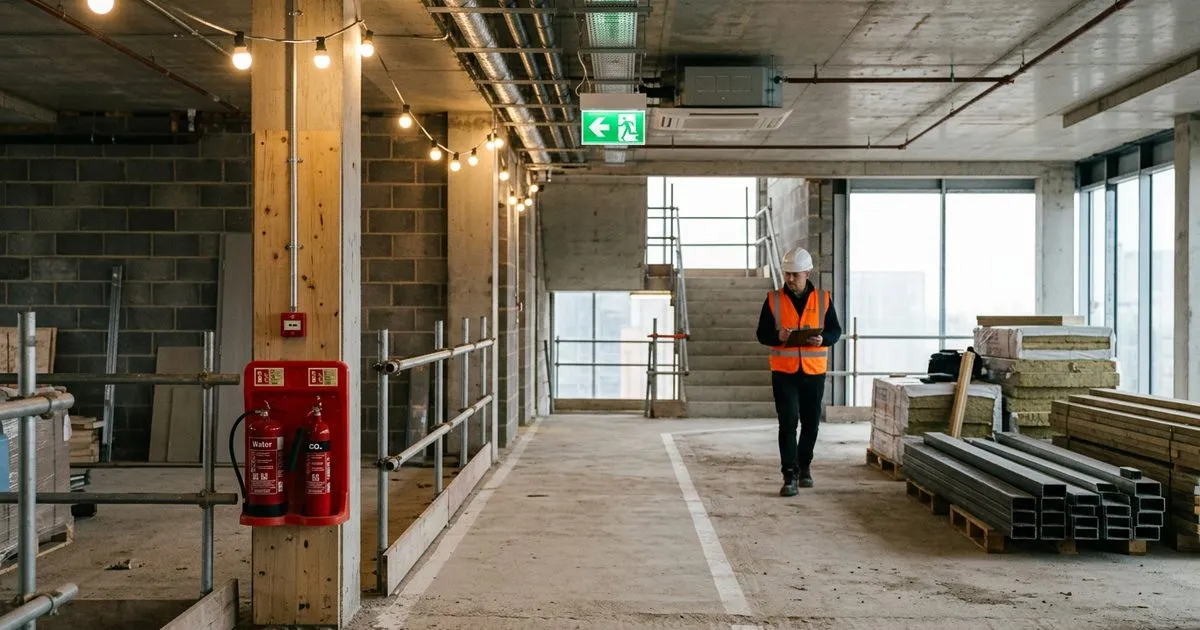
Means of escape. Escape routes on a construction site change from week to week. The assessment has to show how people get out from every working area today, how routes are kept clear and lit, and what happens when a stair is closed or a floor is extended.
Detection and warning. Few sites can rely on the permanent alarm system. Most need a temporary alarm, and on some build types HSE expects it to be installed early and extended as the building grows.
Fire-fighting and fire service access. Extinguishers matched to the hazards and placed where they will be needed, people shown how to use them, and a clear route and water supply for the fire service.
Temporary accommodation. Site offices, welfare units and drying rooms need a fire risk assessment of their own. Units stacked on top of each other need fire resistance between them.
High-risk construction methods. Timber frame and other combustible structures are most exposed before the permanent fire protection is installed. HSE notes that fire can then spread quickly through the structure and on to neighbouring buildings, so the design team and the principal contractor need to plan the sequence of work with fire in mind.
Working in occupied buildings
Refurbishment in a building that stays in use brings the two sets of duties together. The building’s responsible person and the principal contractor are both responsible for fire safety in the same premises, and the Fire Safety Order requires them to find out about each other, co-operate, co-ordinate their measures and tell each other about the risks.
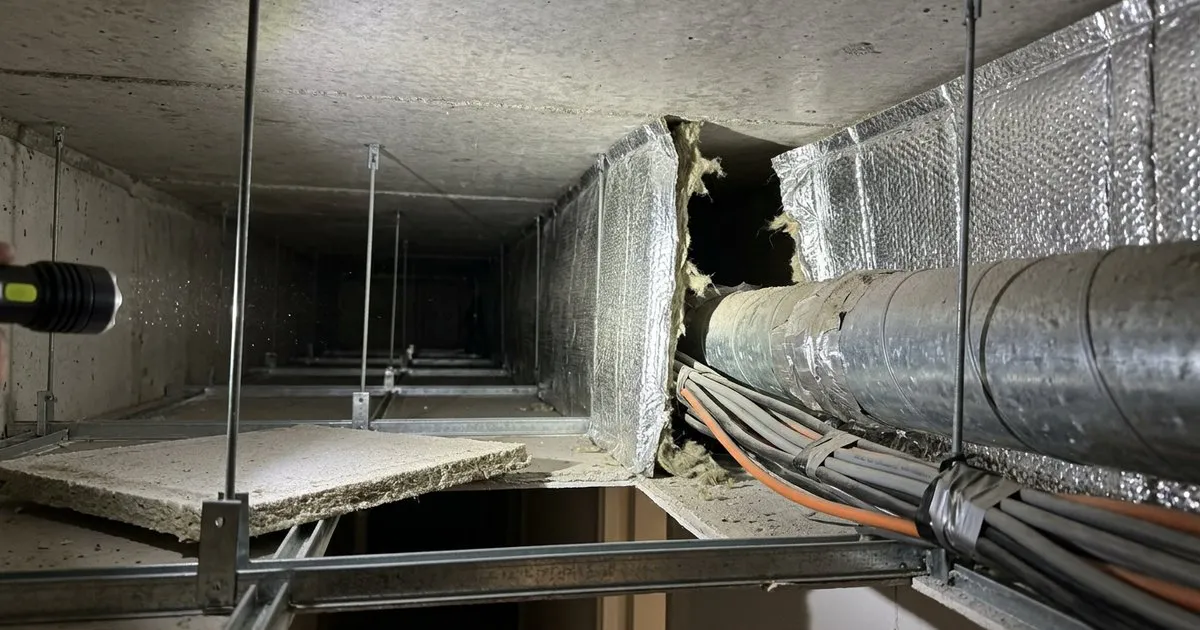
In practice the risks sit at the boundary. Works can block an escape route the occupants rely on, an isolated detector can leave an occupied floor unprotected, and services run through a fire-resisting wall can breach the compartmentation the rest of the building depends on. Our article on why fire stopping fails shows how quickly that happens. Agreeing these arrangements before work starts, and recording them, is far easier than untangling them after an incident.
Keep it live
A site fire risk assessment written in week one and never opened again is a common failure, and an easy one to miss. HSE’s guidance is direct about it: because sites change rapidly and the workforce is often transient, the assessment and its controls have to keep up, and any significant change in process or material should be assessed before it is introduced.
Review the assessment when the structure changes, when a new trade or material arrives, when escape routes move, and after any fire, false alarm or near miss. Brief the fire arrangements at site induction, so that everyone who arrives knows the alarm, the routes and the assembly point, and run evacuation drills at suitable intervals, because CDM requires the arrangements to be tested.
Insurers may ask for more
On many projects the insurer requires compliance with the Joint Code of Practice on Fire Prevention on Construction Sites, published by the Fire Protection Association and backed by insurers. It is not law, but where an insurance or building contract requires it, falling short can put the cover at risk. Check what your policy asks for before work starts.
When the building is finished
The site fire risk assessment ends with the construction phase. The finished building then needs its own fire risk assessment and the fire safety information that should be handed over with it. Our article on what happens to the fire strategy after handover covers that part of the story.
How MAST Safety can help
MAST Safety brings CDM and fire safety together in one team. Our CDM consultants help clients, principal designers and principal contractors meet their duties, and we prepare site fire risk assessments that sit inside the construction phase plan and are reviewed as the work progresses.
Plan fire safety into your next project
Whether you need a site fire risk assessment for the construction phase plan, or want fire safety considered from the pre-construction stage, speak to the MAST Safety team.