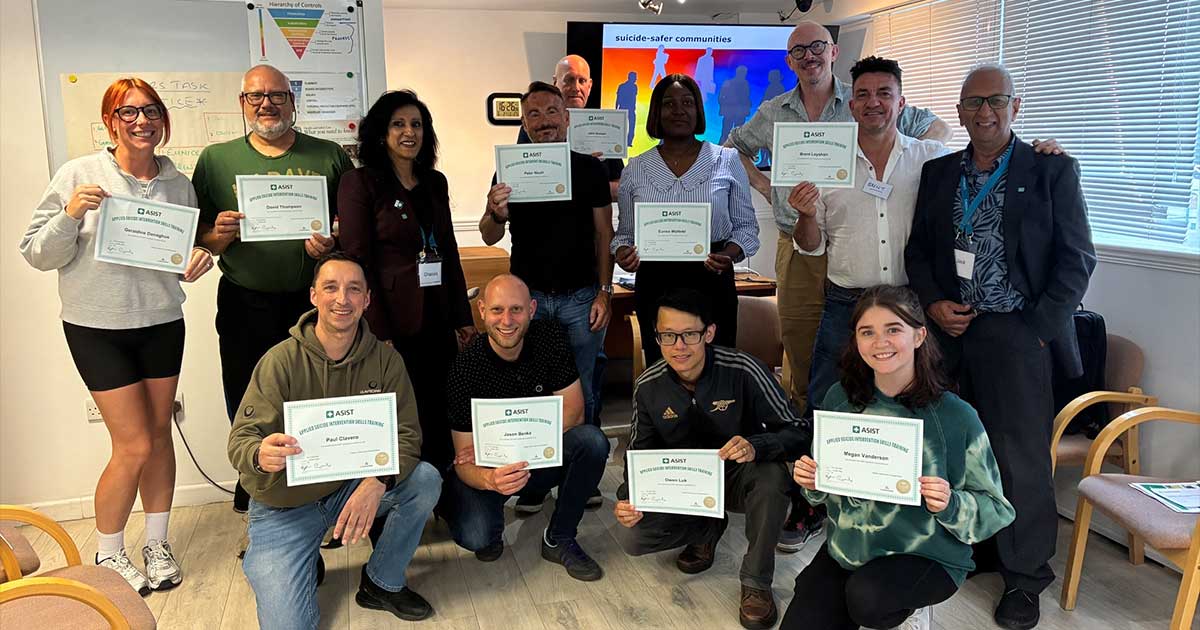
We were proud to host a two-day Applied Suicide Intervention Skills Training (ASIST) course earlier this week, welcoming a team from Transport for London alongside a colleague from Essex Security Services.
Over the two days, every participant earned their certificate and left as a qualified suicide first-aid helper, someone ready, willing and able to step in when a person is struggling and guide them towards safety.
What the course covers
ASIST is an internationally recognised, two-day workshop developed by LivingWorks. It is built around skills practice rather than theory alone, and it equips people to recognise when someone may be at risk of suicide and to respond with confidence, care and clarity.
Across the two days, the group learned how to:
- Recognise when someone may be having thoughts of suicide, including the quieter invitations for help that are easy to miss.
- Open up an honest, supportive conversation rather than stepping around the subject.
- Review risk and work with the person to build a practical safety plan that keeps them safe for now.
- Connect people with the right professional and community support for the longer term.
The emphasis throughout is on compassion and collaboration. ASIST is not about diagnosing or treating, it is about being the person who notices, who is willing to ask the direct question, and who knows what to do next.
Why it matters for employers
For organisations with large, frontline and public-facing workforces, having trained suicide first-aid helpers on the team can make a real difference. It means there are people on the ground who feel equipped to step forward in a moment that matters, and it contributes to the wider goal of suicide-safer workplaces.
ASIST sits at the more advanced, intervention-focused end of mental health training. Many organisations pair it with broader awareness training, and we have written a short guide on the difference between Mental Health First Aid and ASIST to help employers choose the right mix for their teams.
A word from our visitors
“I found the course very informative, and thoroughly enjoyed both the course itself and the people attending.”
Paul Clavero, Lead Project Construction Manager, London Underground
We are grateful to everyone who took part for engaging so openly with what can be a difficult subject.
If you or someone you know is struggling, you do not have to face it alone. The Samaritans are available day or night, free, on 116 123.