Common fire safety failures are not always the result of negligence. In many cases, they happen because no one has carried out a structured review recently, or because small issues have been quietly overlooked over time.
During Fire Risk Assessments across Essex and London, our team regularly identifies the same avoidable problems appearing across different premises and sectors.
What are the most common fire safety failures we find?
The issues below are not rare edge cases. They come up again and again, regardless of business size or industry.
Fire doors wedged open Fire doors are a critical part of a building’s passive fire protection. Wedging them open, even for convenience, undermines the entire fire compartmentation strategy and can allow fire and smoke to spread rapidly.
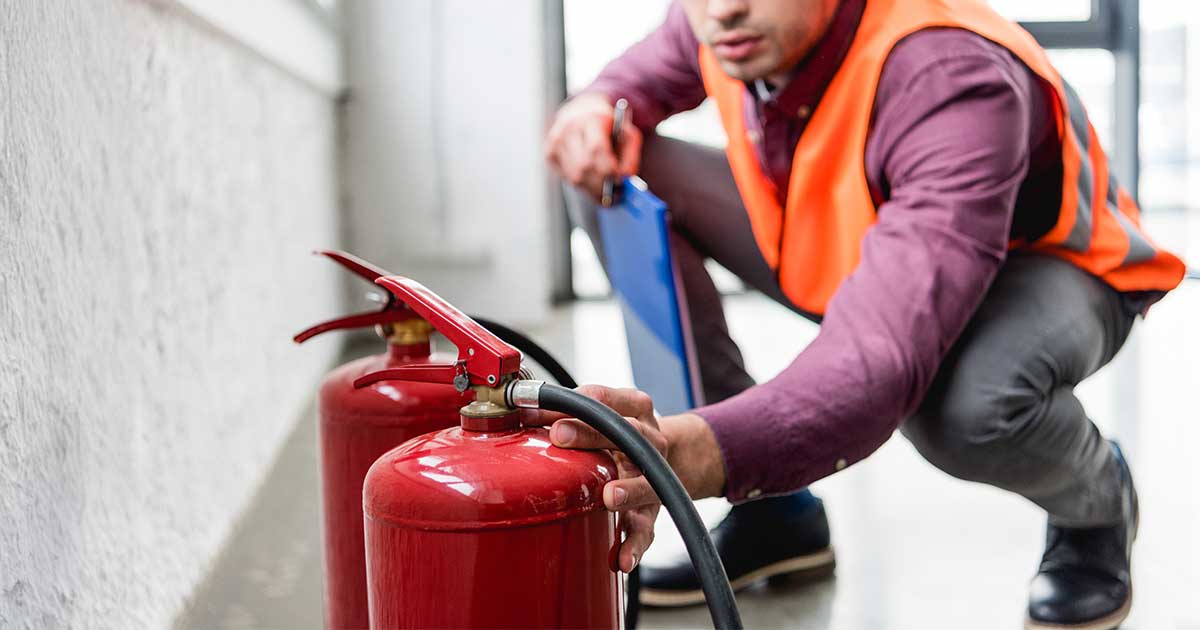
Expired extinguisher servicing Fire extinguishers must be serviced annually by a competent person. Out-of-date servicing is one of the most frequently flagged issues we encounter, and one of the simplest to resolve.
Emergency lighting not tested Emergency lighting must be tested monthly (a brief function check) and annually (a full discharge test). Many businesses carry out neither, meaning they have no confidence it will work when needed.
Poor or missing signage Fire exit routes, assembly points and fire safety equipment must be clearly signed. Faded, obscured or missing signage is a consistent finding, particularly in premises that have been partially refurbished or rearranged.
No identified Responsible Person Under the Regulatory Reform (Fire Safety) Order 2005, every non-domestic premises must have a Responsible Person who takes accountability for fire safety. Where this role is not formally identified or documented, businesses are exposed to significant legal risk.
Outdated assessments A Fire Risk Assessment is not a one-off document. It must be reviewed regularly and updated whenever there are significant changes to the premises, occupancy or activities. Assessments written several years ago and never revisited are unlikely to reflect current risk.
Are these issues serious?
Each one on its own can result in enforcement action by the Fire and Rescue Authority, including improvement notices, prohibition orders or prosecution. Taken together, they indicate a fire safety management system that is not functioning as it should.
These are rarely complex problems to resolve. But identifying them requires a structured assessment carried out by someone who knows what to look for.
How we can help
Through our Fire Risk Assessment service, we carry out a thorough review of your premises, document all findings and provide a prioritised action plan with clear risk ratings so you know exactly what needs addressing and in what order.
Fire compliance is not about catching businesses out. It is about protecting the people in your building and ensuring your organisation meets its legal obligations in a practical, proportionate way.
If you would like a review of your current fire safety arrangements, you can get in touch using any of the options below.