Warehouse and logistics employers are subject to some of the most demanding health and safety legislation in any working environment. Knowing what the law requires — and where your obligations begin and end — is the starting point for managing it properly.
Health and safety law does not treat all workplaces the same. While the core legislation applies across every sector, warehousing and logistics environments attract a particularly significant body of regulation, reflecting the range of hazards present and the consistent level of serious incidents the sector generates in HSE enforcement data year after year.
This article sets out the key legal duties that apply to warehouse employers in the UK, the regulations most relevant to this environment, and what genuine compliance looks like in practice.
The Foundation: The Health and Safety at Work Act 1974
Every employer’s obligations begin here. The Health and Safety at Work Act 1974 places a general duty on employers to ensure, so far as is reasonably practicable, the health, safety and welfare of their employees. It also extends duties to anyone else who might be affected by the business’s operations — contractors, agency workers, visitors and members of the public.
In a warehouse context, this general duty has considerable reach. It covers the physical environment, the equipment in use, the systems of work your people follow, and the information, instruction, training and supervision you provide. None of these can be treated as optional.
Management of Health and Safety at Work Regulations 1999
The Management Regulations sit alongside the 1974 Act and make many of its general duties more specific. For warehouse employers, the most significant requirement is the duty to carry out suitable and sufficient risk assessments covering all significant hazards in the workplace.
In a busy warehouse operation, this extends to manual handling, workplace transport, racking and storage systems, working at height, loading and unloading activities, fire, noise, and the risks associated with any hazardous substances present on site. Each of these requires its own assessment, with controls identified, implemented and reviewed on a regular basis.
The Management Regulations also require employers to appoint at least one competent person to assist them in meeting their health and safety obligations. For many warehouse and logistics businesses that do not have a dedicated safety manager, this is best fulfilled through an external consultancy arrangement rather than adding the responsibility to an existing operational role.
PUWER: Provision and Use of Work Equipment Regulations 1998
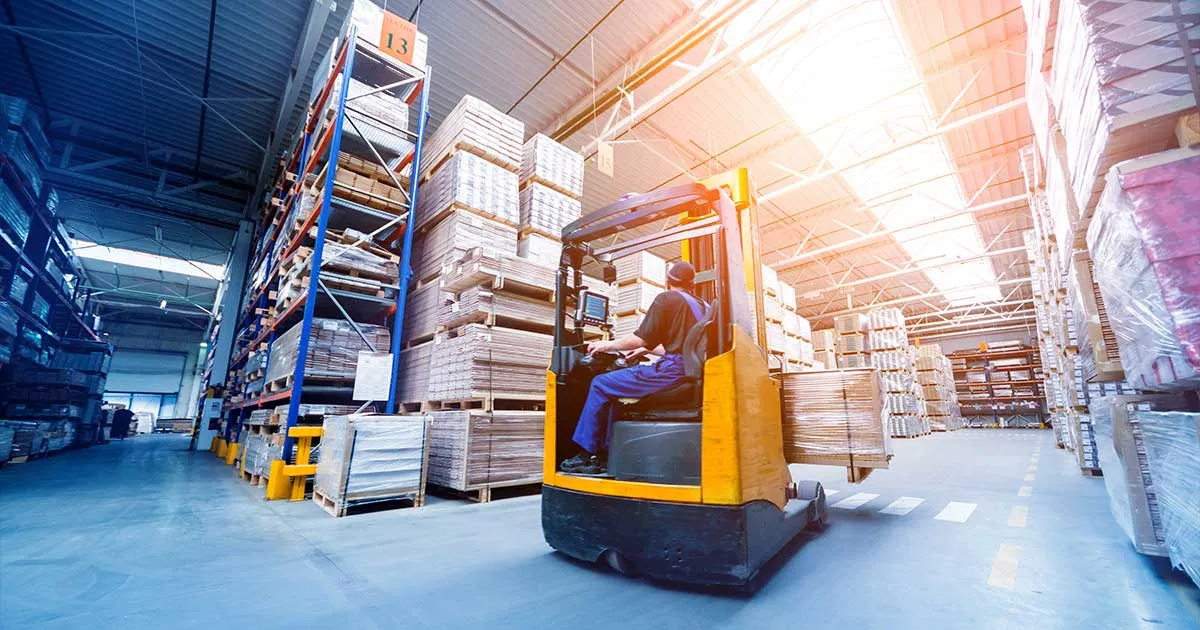
Warehousing relies heavily on work equipment, from forklift trucks and pallet stackers to conveyor systems, dock levellers and hand tools. PUWER requires that all work equipment is suitable for its intended use, maintained in a safe condition, inspected at appropriate intervals, and used only by people who have received adequate training and instruction.
This applies to every piece of equipment in the operation, not just the items that feel obviously high-risk. A poorly maintained dock leveller or a hand pallet truck with a defective brake mechanism can cause serious injury just as readily as larger vehicles.
Records of inspections, maintenance and training are a practical requirement under PUWER, not optional paperwork. If something goes wrong, the absence of records makes it considerably harder to demonstrate that you met your obligations.
LOLER: Lifting Operations and Lifting Equipment Regulations 1998
Where lifting equipment is in use — and in most warehouses it is — LOLER applies. It requires that lifting equipment is strong and stable enough for its intended load, positioned and installed safely, marked with its safe working load, and subject to thorough examination by a competent person at specified intervals.
For forklift trucks, this means a LOLER thorough examination every six or twelve months depending on how the equipment is used. Mast lifts, scissor lifts and other lifting platforms are subject to the same requirement. The thorough examination is distinct from routine maintenance and must be carried out by a competent independent examiner, with a written report produced after each examination.
Both are compliance failures that can attract enforcement action and, in the event of an accident, will feature prominently in any investigation.
Manual Handling Operations Regulations 1992
The warehousing and logistics sector accounts for a disproportionate share of manual handling injuries reported each year under RIDDOR. The Manual Handling Operations Regulations require employers to avoid manual handling where it is reasonably practicable to do so, assess the risks where it cannot be avoided, and reduce those risks to the lowest level reasonably practicable.
This hierarchy matters. Simply providing training and telling workers to lift correctly does not satisfy the regulation if mechanical aids or task redesign could have reduced the risk at source. Employers need to consider the task, the load, the working environment and the capability of the individual, and put controls in place that genuinely address what they find.
Work at Height Regulations 2005
Work at height in warehousing is broader than it might initially appear. Picking from elevated racking, accessing mezzanine floors, maintaining roof-mounted equipment, working on loading platforms and using steps or stepladders for stock management all fall within scope.
The Work at Height Regulations 2005 require employers to avoid work at height where they reasonably can, use work equipment or other measures to prevent falls where work at height cannot be avoided, and where the risk of a fall cannot be eliminated, use equipment or other measures to minimise the distance and consequences of a fall.
The hierarchy of control is clear: collective protection (guardrails, barriers, work platforms) takes priority over personal protection (harnesses and lanyards). Both require training, inspection and appropriate supervision.
Noise: Control of Noise at Work Regulations 2005
Mechanical handling equipment, conveyor systems, compressors and reversing alarms can generate sustained noise levels in warehousing environments that require formal assessment. The Control of Noise at Work Regulations 2005 set action levels at 80 dB(A) for lower exposure and 85 dB(A) for upper exposure, with a peak sound pressure limit of 140 dB(C).
Where noise levels reach or exceed the lower exposure action value, employers must assess the risk, provide information to workers and make hearing protection available. At the upper exposure action value, hearing protection becomes mandatory and noise control measures must be implemented. Many warehouse operations have never conducted a formal noise risk assessment, leaving them exposed to both enforcement risk and the longer-term liability of noise-induced hearing loss claims.
Where Employers Most Often Fall Short
Understanding the regulations is one thing. Applying them consistently in a fast-moving operation is another. The most common compliance gaps we see in warehousing tend to cluster around the same areas: risk assessments that have not been reviewed since they were first written, LOLER examination records that are out of date, manual handling controls that amount to little more than a poster on the wall, and noise assessments that have never been carried out at all.
Our recent article on common health & safety failures in warehouse and logistics environments goes into more detail on the practical side of where things go wrong and what businesses should be doing differently.
Getting the Right Support in Place
Warehouse employers carrying the full weight of these legal duties without specialist support are at meaningful risk — not just of enforcement action, but of the kind of serious incident that legislation is designed to prevent.
MAST Safety works with warehouse and logistics businesses across the UK, providing retained consultancy support, risk assessments, racking inspections, LOLER compliance checks, and the competent person service required under the Management Regulations. If you would like to understand how we can support your operation, our team is happy to discuss your specific situation.
Find out how MAST Safety can help
MAST Safety supports warehouse and logistics businesses with retained consultancy, risk assessments and competent person cover. Speak to the team today to discuss your specific situation.