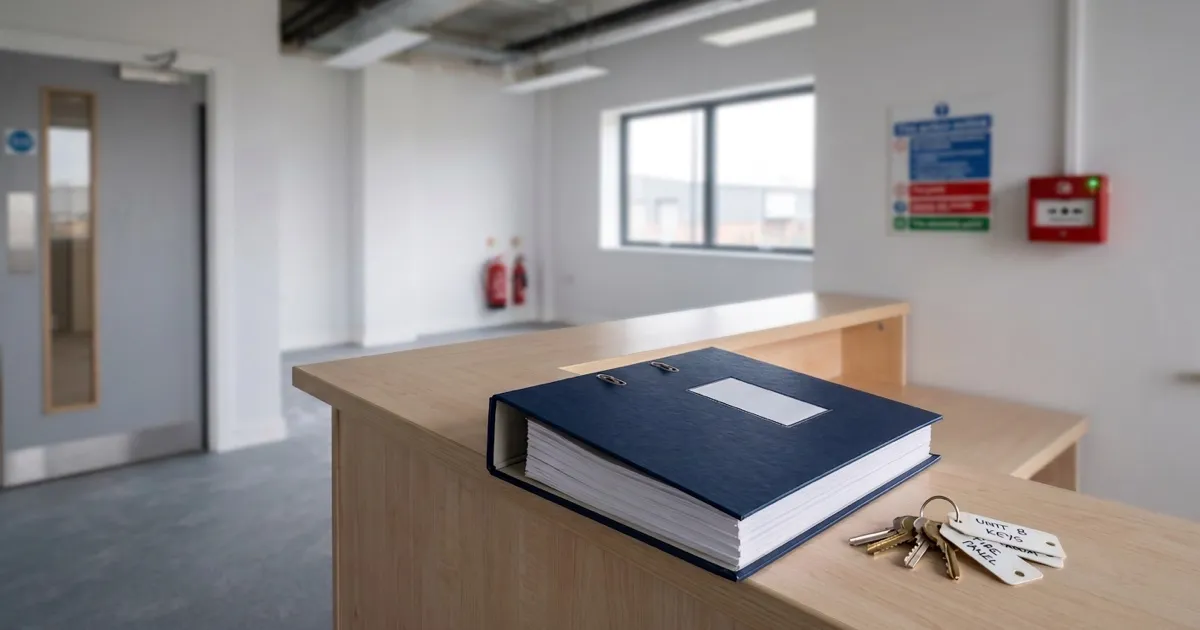
If you own or manage commercial premises, a house in multiple occupation (HMO), or any building with shared areas, a fire risk assessment is not optional. It is a legal requirement. Many landlords are unsure exactly where their obligations begin and end, which creates compliance gaps that enforcement officers are increasingly active in identifying and acting on.
This article sets out what the law requires of landlords, what a fire risk assessment should cover, and how professional support from MAST Safety makes the process straightforward.
What the Law Requires
The Regulatory Reform (Fire Safety) Order 2005 applies to almost all non-domestic premises, and to the communal and shared areas of residential buildings. Under the Order, the “Responsible Person” must ensure a suitable and sufficient fire risk assessment is in place and kept up to date.
For landlords, the Responsible Person is typically the building owner, managing agent, or the person who has control of the premises. In some cases, particularly in multi-occupied commercial buildings, responsibility may be shared between a landlord and individual tenants depending on what each party controls.
The Fire Safety Act 2021 extended the scope of the 2005 Order to include the external walls and flat entrance doors of multi-occupied residential buildings in England, bringing more building types within the scope of mandatory fire risk assessment.
Failure to carry out a suitable fire risk assessment, or to act on its findings, can result in enforcement notices, prohibition orders, unlimited fines or, in serious cases, prosecution.
Which Premises Are Covered?
Landlords of the following types of premises are required to have a fire risk assessment in place:
- Commercial properties including offices, retail units, industrial premises and warehouses
- Houses in multiple occupation (HMOs), where three or more tenants form two or more households and share facilities
- Blocks of flats, for all communal areas including corridors, stairwells, entrance halls and plant rooms
- Mixed-use buildings containing both residential and commercial elements
- Houses converted into flats, whether or not the conversion complied with building regulations in force at the time
- Purpose-built student accommodation and other large residential buildings
The position is slightly different for conventional single-let residential properties where a landlord rents to a private family. In most cases, the 2005 Order does not apply to the internal parts of those premises. However, landlords of such properties still have fire safety obligations under other legislation, including the requirement to install working smoke alarms and carbon monoxide detectors.
What a Landlord Fire Risk Assessment Should Cover
A fire risk assessment for a landlord is not a form to be filled in. It is a structured evaluation of the premises carried out by a competent person. A well-conducted assessment will:
- Identify all potential sources of ignition, fuel and oxygen within the common areas and, where applicable, the wider building
- Assess who may be at risk in the event of a fire, including residents, visitors, contractors and any individuals with mobility or sensory impairments
- Evaluate the effectiveness of existing fire safety measures, including fire detection and alarm systems, emergency lighting, firefighting equipment, fire doors, escape routes and signage
- Identify any actions required to reduce risk to an acceptable level
- Produce a clear written report with a prioritised action plan, including risk ratings to help focus remedial work
- Set a review date and identify the triggers that would require an earlier review
The assessment must be carried out by someone with sufficient knowledge and experience to identify fire hazards, evaluate risk and understand the relevant legislation. That person does not have to be a specialist fire safety engineer for most premises, but they do need to be competent. For more complex buildings, or where a previous assessment has been challenged by a fire authority, professional input is strongly advisable.
Common Compliance Gaps for Landlords
In our experience working with building owners and managing agents, a small number of issues come up repeatedly:
- Assessments that are out of date. A fire risk assessment must be reviewed regularly, and following any significant change to the building, its use or its occupancy. An assessment carried out five years ago for a different type of tenant may no longer be suitable or sufficient.
- Missing or inadequate fire doors. Flat entrance doors and fire doors on escape routes are critical to containing fire and giving occupants time to evacuate. Many older buildings have doors that do not meet current guidance.
- Poor record keeping. The Responsible Person must be able to demonstrate that a suitable assessment has been carried out and that significant findings have been recorded. Verbal assurances are not enough.
- No action plan follow-through. An assessment that identifies risks but sees no remedial action taken is worse than no assessment at all, because it demonstrates that hazards were known and ignored.
- Confusion over responsibility in multi-tenanted buildings. Where a building has both a landlord and individual tenants, the boundaries of each party’s responsibility need to be clearly established and documented.
How Often Does a Landlord Fire Risk Assessment Need Reviewing?
There is no fixed legal interval specified in the 2005 Order, but annual review is widely recognised as best practice for most commercial and residential premises. A review should also be triggered by:
- Changes to the layout or structure of the building
- A new type of tenant or a significant change in how the premises are used
- Any fire, near miss or enforcement notice
- The introduction of new legislation or updated guidance
- A change in the identity of the Responsible Person
An assessment that was completed correctly at the outset but never reviewed can leave landlords exposed, particularly if the building has changed in any material way since the original visit.
How MAST Safety Supports Landlords
MAST Safety provides professional Fire Risk Assessments for commercial premises, HMOs, blocks of flats and mixed-use buildings across Essex and London. Our assessors carry out thorough on-site inspections and produce clear, compliant written reports with prioritised action plans.
We work with individual landlords, portfolio managers and managing agents, providing assessments that are proportionate to the premises and practical in their recommendations. We also offer annual review reminders so your compliance does not drift over time.
If you are unsure whether your existing fire risk assessment is still suitable and sufficient, or if you have recently acquired a property and need to establish its compliance position, speak to our team. We will explain what is required and arrange an assessment at a time that works for you.
Fire Risk Assessments for Landlords: Frequently Asked Questions
Is a fire risk assessment a legal requirement for landlords?
Yes, for most commercial properties, HMOs and residential buildings with communal areas. The Regulatory Reform (Fire Safety) Order 2005 places a legal duty on the Responsible Person to ensure a suitable and sufficient fire risk assessment is in place. Failure to comply can result in enforcement action, fines or prosecution.
Does a fire risk assessment apply to a standard buy-to-let property?
For a straightforward single-let residential property occupied by one household, the 2005 Order generally does not apply to the internal parts of the property. However, landlords still have fire safety obligations under other legislation, including requirements around smoke alarms, carbon monoxide alarms and the general duty not to let a property that is dangerous. Where the property is an HMO, or part of a building with communal areas, the 2005 Order will apply.
Who can carry out a landlord fire risk assessment?
The assessment must be carried out by a competent person with the knowledge, skills and experience to identify fire hazards, evaluate risk and understand fire safety legislation. This does not have to be a specialist fire engineer for straightforward premises, but it does need to be someone who can produce a written report that would satisfy a fire authority inspection. Using a professional assessor removes the risk of gaps that a non-specialist might miss.
How much does a landlord fire risk assessment cost?
Cost varies depending on the size and complexity of the premises. A single commercial unit or small HMO will be assessed at a different fee to a multi-storey block of flats. Contact MAST Safety for a straightforward conversation about your premises and we will provide clear, transparent pricing with no obligation.
Find out how MAST Safety can help
If you are unsure whether your existing fire risk assessment is still suitable and sufficient, or if you have recently acquired a property and need to establish its compliance position, speak to the MAST Safety team today.