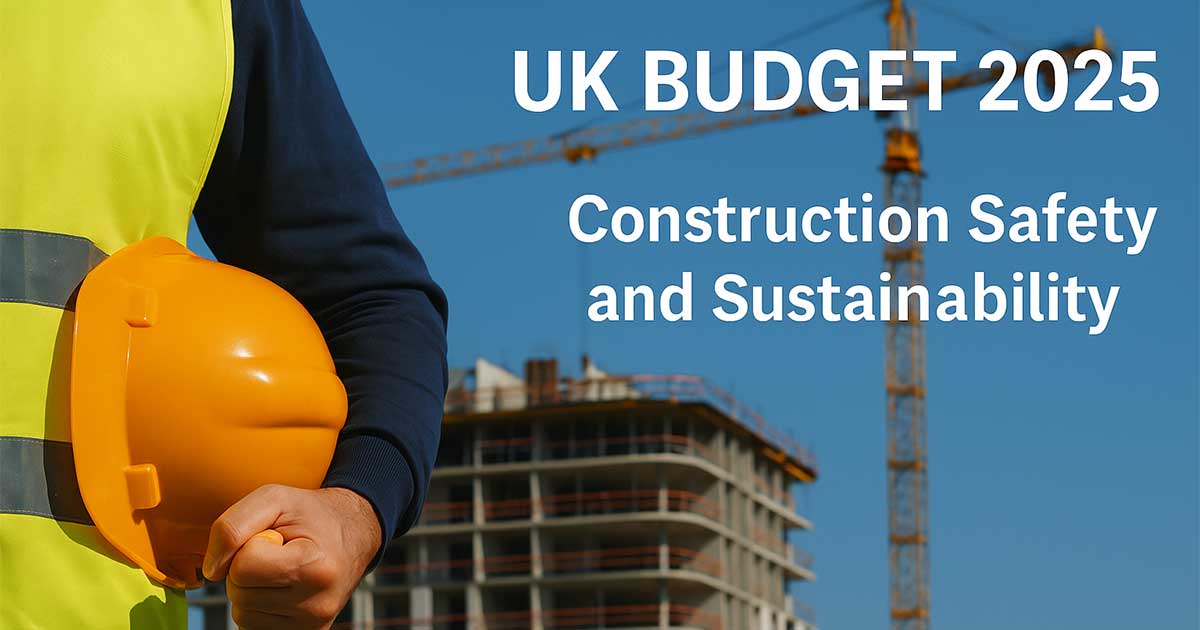
The UK Budget delivered at the end of November 2025 confirmed continued government support for public infrastructure, energy and large-scale construction projects. For the construction industry, this signals increased opportunity — but it also brings greater responsibility.
As workloads increase and projects become more complex, health, safety and environmental management cannot be treated as a secondary consideration. In practice, more work means more people on site, more subcontractors, tighter programmes and greater scrutiny from clients and regulators alike.
At Mast Safety, we are already supporting clients as they adapt to these pressures and ensure safety remains at the centre of project delivery.
More Construction Activity Means Greater CDM Responsibilities
An increase in construction output inevitably leads to:
- More complex site environments
- Greater use of subcontractors and specialist trades
- More projects that are notifiable to the Health and Safety Executive
- Increased work in public-facing or occupied locations
These factors place additional pressure on duty-holders under the Construction (Design and Management) Regulations. Principal Designers, Principal Contractors and contractors at all levels must ensure that management arrangements remain robust — even when programmes are compressed and resources are stretched.
More projects must never mean more shortcuts. Clear duty-holder roles, competent appointments and effective planning are essential to maintaining legal compliance and protecting those working on or affected by construction activity.
Many organisations choose to strengthen this area by engaging CDM consultancy and Principal Designer support early in the project lifecycle.
Why CDM Planning and Site Supervision Are Under the Spotlight
As project volumes increase, weaknesses in planning and supervision tend to surface quickly. Common issues we see include:
- Construction Phase Plans produced too late or treated as generic paperwork
- Inadequate coordination between designers, contractors and subcontractors
- Supervisors overstretched across multiple work areas
- Insufficient inductions and briefings for changing site teams
Strong CDM management is not about paperwork alone. It requires competent people, clear communication and active supervision throughout the life of the project.
Investing in competent site leadership and ensuring managers and supervisors fully understand their responsibilities is one of the most effective ways to maintain control on busy, high-pressure sites.
Formal training such as SMSTS training for site managers and SSSTS training for supervisors plays a key role in supporting safe decision-making and legal compliance on site.
Sustainability, ESG and Safety Are Now Interlinked
The Budget also reinforces national objectives around sustainability, carbon reduction and responsible resource use. For construction businesses, environmental and social governance (ESG) requirements are no longer separate from health and safety — they are increasingly assessed together.
Clients now expect contractors to demonstrate:
- Carbon and environmental data collection
- Waste segregation and recycling performance
- Pollution prevention measures
- Consideration of community and public impact
Poor environmental planning can create safety risks just as readily as traditional site hazards. Waste storage, vehicle movements, material choices and site logistics all influence both environmental performance and workforce safety.
Integrating environmental controls into health and safety planning is now a core part of modern construction management.
Practical Steps Contractors Should Be Taking Now
In response to the increased workload and expectations highlighted by the Budget, contractors should be taking proactive steps, including:
- Reviewing duty-holder appointments and competence across projects
- Refreshing Construction Phase Plans to reflect current site conditions
- Strengthening behavioural safety programmes, particularly with agency and subcontract labour
- Increasing the frequency and quality of inductions, toolbox talks and briefings
- Improving basic data collection for carbon, waste and sustainability performance
Taking these steps early helps avoid compliance gaps later — particularly as projects scale up or programmes accelerate.
How Mast Safety Supports Clients During Periods of Increased Demand
Periods of growth place pressure on internal resources. Mast Safety supports construction businesses by providing practical, proportionate support tailored to real site conditions.
Our services include:
- CDM consultancy and duty-holder support
- Ongoing health and safety advice for live projects
- Site audits, inspections and compliance reviews
- Training for managers, supervisors and site teams
By combining consultancy support with targeted training, we help clients maintain compliance, protect their workforce and deliver projects safely — even in demanding conditions.
During periods of increased demand, many organisations rely on health & safety consultancy support to maintain compliance, manage risk effectively and respond to changing site conditions.
Safety Must Lead the Way
The UK Budget presents a clear opportunity for the construction industry. Increased investment can support growth, skills development and long-term improvement across the sector.
However, the message is clear: as workloads increase, safety leadership must strengthen — not weaken. Robust CDM arrangements, competent supervision and integrated environmental planning are essential to ensuring that opportunity does not come at the cost of safety.
At Mast Safety, we continue to work with clients to ensure that safety leads the way, whatever the scale or complexity of the project.