Excessive workplace noise remains one of the most underestimated health risks in construction, manufacturing and industrial environments. While many employers provide hearing protection as required, recent inspections across the UK have shown that provision alone is not enough. Without the right checks, training and supervision, hearing protection can give a false sense of security — leaving workers exposed to permanent hearing damage.
A structured approach to managing hearing protection helps employers move beyond box-ticking and towards real, effective noise control.
Why Noise Protection Often Fails in Practice
In noisy environments, hearing protection is frequently issued but rarely reviewed. Common problems include damaged ear defenders, inconsistent use, poor fitting, and equipment that is unsuitable for the task being carried out. In some cases, protection is so effective that it prevents workers from hearing alarms, reversing vehicles or shouted warnings — creating a different but equally serious safety risk.
Managing noise exposure properly requires both technical understanding and day-to-day supervision, not just a supply of PPE.
A Practical Framework for Managing Hearing Protection
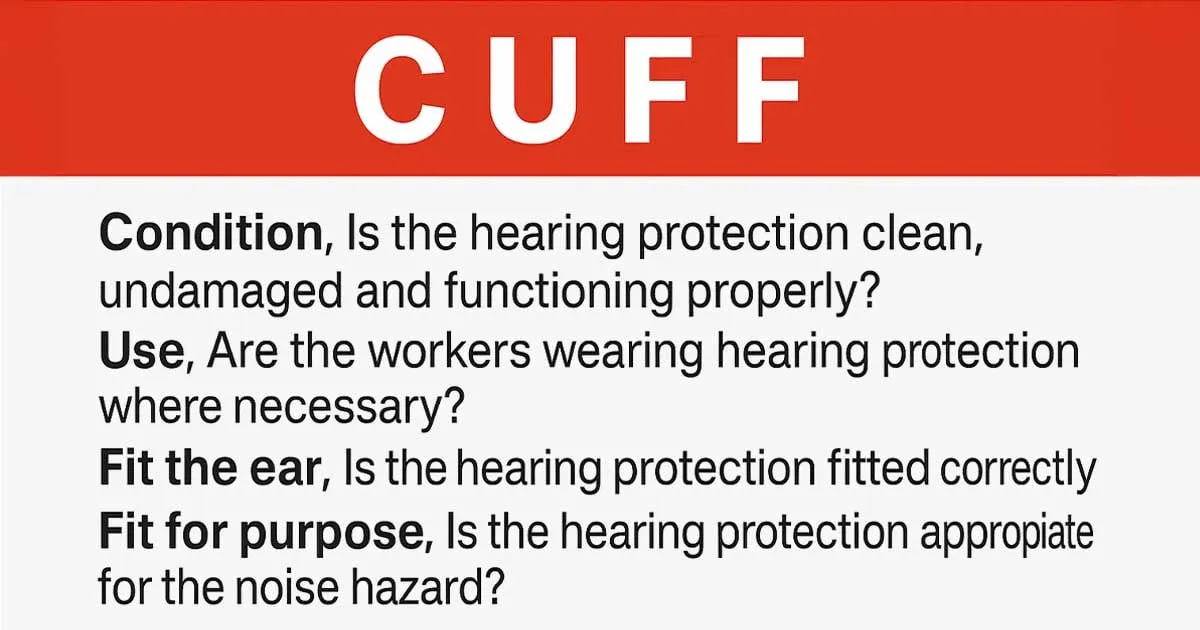
A simple way to approach hearing protection is to focus on four key principles that should be checked regularly on site.
1. Equipment Condition Matters
Hearing protection must be clean, intact and fully functional. Ear defenders with worn seals, cracked casings or clogged foam inserts can significantly reduce protection levels without being obvious to the wearer. Regular inspection and replacement should form part of routine site checks.
This is often reviewed as part of broader workplace risk assessments, which is why many organisations choose to include noise hazards within their wider health and safety consultancy support rather than treating them in isolation.
2. Protection Must Actually Be Used
Even the best equipment offers no protection if it isn’t worn. Workers may remove hearing protection for comfort, communication or short tasks, not realising that brief exposures can still cause long-term damage.
Clear signage, supervision and reinforcement during site inductions and toolbox talks are essential. This links directly to training expectations covered within construction health & safety training programmes, where noise awareness is positioned as a behavioural as well as technical issue.
3. Correct Fit Is Critical
Poorly fitted earplugs or misaligned earmuffs can reduce protection dramatically. Hair, headwear, safety glasses and other PPE can all interfere with the seal if not considered properly.
Workers should be shown how to fit hearing protection correctly and understand when it needs adjusting or replacing. This is one of the most commonly missed elements of noise control and a key reason why formal instruction makes such a difference.
4. Hearing Protection Must Be Fit for the Task
Selecting hearing protection is not about choosing the highest rating available. Over-attenuation can be just as dangerous as under-protection, particularly where workers need to hear alarms, vehicle movements or verbal instructions.
Choosing appropriate protection requires an understanding of measured noise levels, task duration and site conditions. Many employers address this through a formal noise assessment carried out alongside their wider risk assessment and compliance services, ensuring protection is appropriate rather than generic.
Your Legal Responsibilities as an Employer
Under the Control of Noise at Work Regulations 2005, employers must assess noise risks, reduce exposure where reasonably practicable, and provide suitable hearing protection where limits are exceeded. Importantly, employers must also ensure workers are given information, instruction and training on how to use that protection correctly.
Failure to do so can lead to enforcement action, compensation claims and long-term harm to workers’ health.
Turning Noise Control into Everyday Practice
Effective noise management is not a one-off exercise. It works best when embedded into everyday site routines, including:
- Regular checks of hearing protection during site inspections
- Ongoing training and refresher sessions for supervisors and operatives
- Clear responsibility for monitoring compliance
- Periodic review of noise risk assessments as sites, tools or processes change
This is why many organisations integrate noise management into their wider health and safety management systems, rather than treating it as a standalone issue.
How MAST Safety Can Help
MAST Safety supports businesses in managing workplace noise through practical, proportionate solutions that focus on real-world site conditions. From supporting risk assessments and reviewing PPE suitability to delivering training that helps supervisors recognise and correct unsafe practices, the aim is always the same: protecting people, not just meeting minimum requirements.
If you are unsure whether your current approach to noise protection is effective, a review by experienced consultants or targeted training can quickly identify gaps and improvements.
Hearing damage is permanent — but it is also preventable. A structured, practical approach to noise protection helps ensure that hearing protection does what it is supposed to do: protect workers, without introducing new risks.
Find out how MAST Safety can help
If you are unsure whether your approach to workplace noise stands up to scrutiny, speak to the MAST Safety team today for a practical review of your risk assessments, hearing protection and training arrangements.